Hardware
77 Hardware terms explained simply, ordered from basic to advanced. Start at the top if the topic is new to you.
Basic
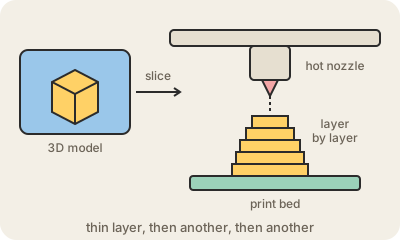
3D printing
Making an object by stacking very thin layers of material, one on top of another.
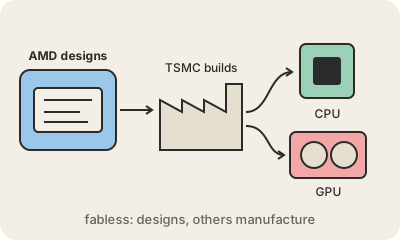
AMD
The chip designer that competes with Intel in CPUs and with NVIDIA in GPUs.
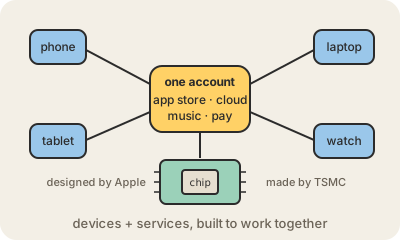
Apple
The company that sells the iPhone and the Mac, plus the services that run on them.
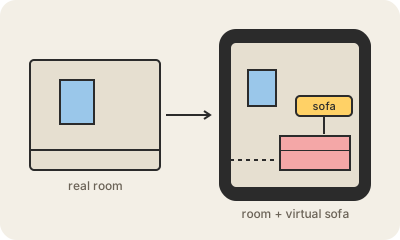
Augmented reality
Digital images laid on top of the real world you are looking at.
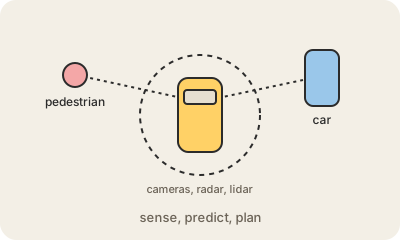
Autonomous vehicles
Cars and trucks that drive themselves using sensors, maps and AI.
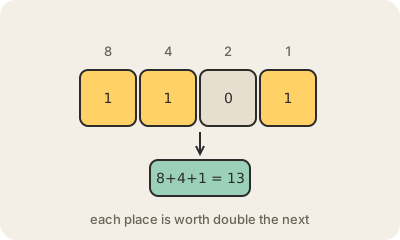
Binary code
Writing everything, numbers, text, images, with only two symbols: 0 and 1.
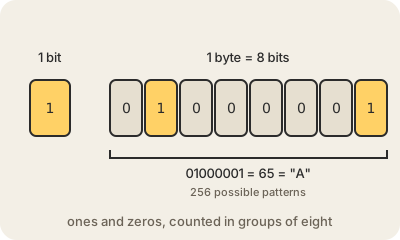
Bit and byte
The smallest unit of digital information, and the group of eight that computers count in.
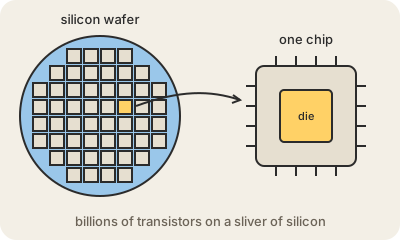
Chip
A sliver of silicon carrying billions of tiny switches that compute and remember.
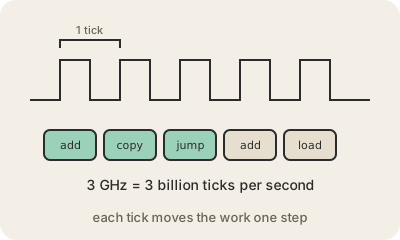
Clock speed
How many times per second a processor ticks, measured in gigahertz (GHz).
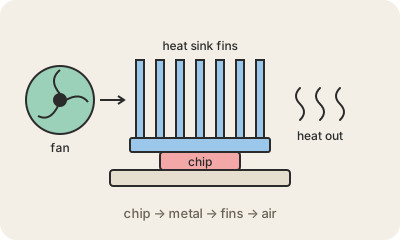
Cooling and heat sinks
How computers get rid of the heat their chips produce so they do not slow down or fail.
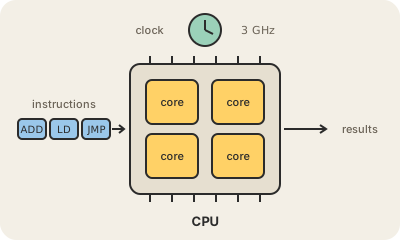
CPU
The chip that runs your programs, one instruction after another, very fast.
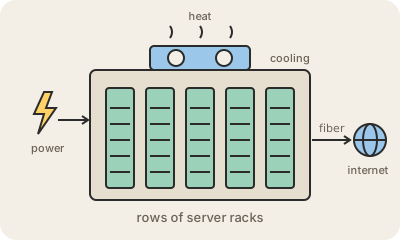
Data center
A building full of servers where the internet, the cloud and AI actually run.
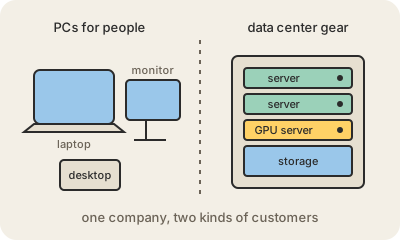
Dell
The American maker of PCs for offices and servers for data centers.
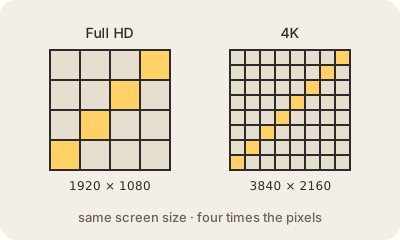
Display resolution
How many dots, or pixels, make up a screen's image: more dots, finer detail.
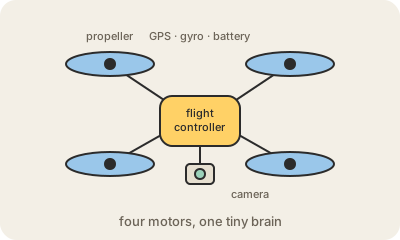
Drone
An aircraft with no pilot on board, flown by remote control or by its own computer.
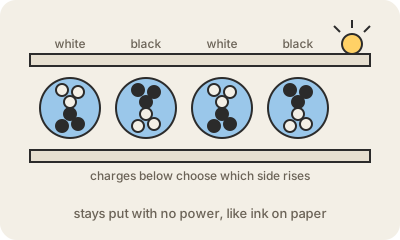
E-ink
A screen that looks like printed paper and only uses power when the image changes.
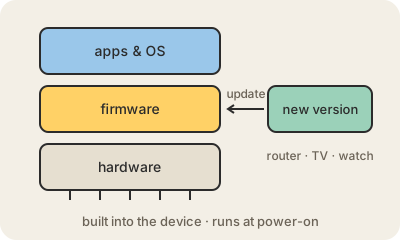
Firmware
Software built into a device to run its hardware, from routers to washing machines.
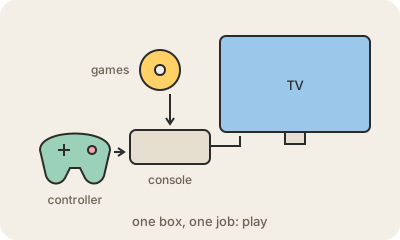
Game console
A computer built only to play video games on your TV, with a controller.
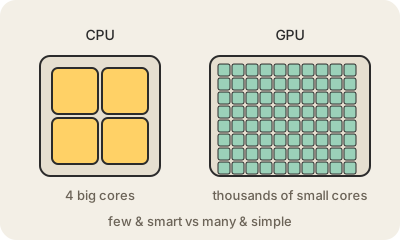
GPU
The chip that does thousands of simple calculations at once.
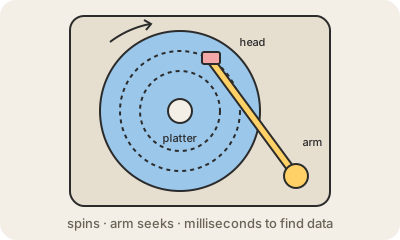
Hard disk drive
Storage that keeps data on spinning magnetic platters: slower than an SSD, but cheap.
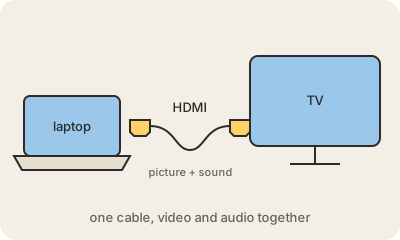
HDMI
The standard cable and plug that carries picture and sound to a TV or monitor.
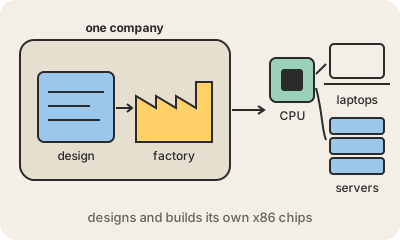
Intel
The American company behind most PC and server processors for decades.
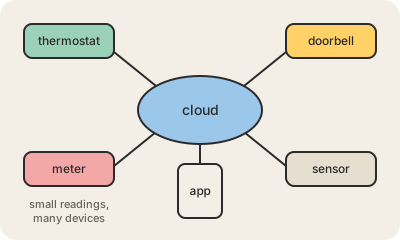
Internet of things
Everyday objects with sensors and a network connection: thermostats, meters, doorbells.
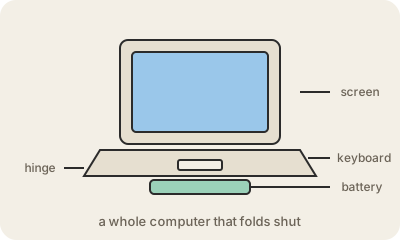
Laptop
A whole computer folded into one portable case that runs on a battery.
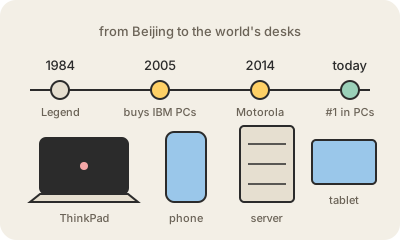
Lenovo
The Chinese company that sells more PCs than anyone, from ThinkPads to Motorola phones.
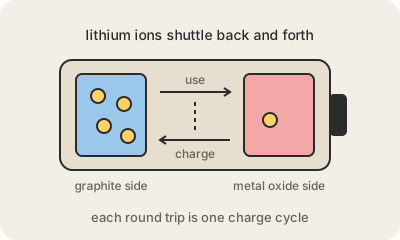
Lithium-ion battery
The rechargeable battery inside phones, laptops and electric cars.
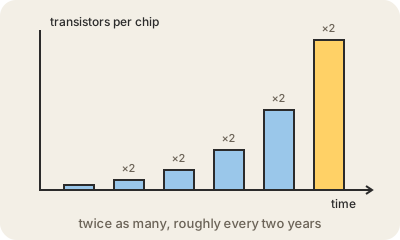
Moore's law
The observation that chips fit about twice as many transistors every two years.
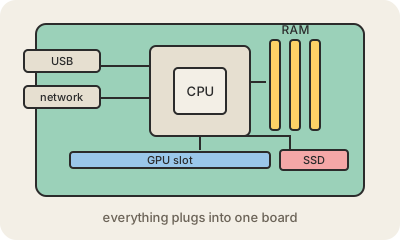
Motherboard
The main circuit board that every other part of a computer plugs into.
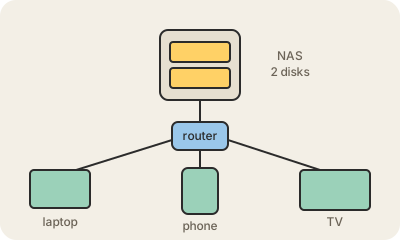
NAS
A small box of hard drives on your network that every device can share.
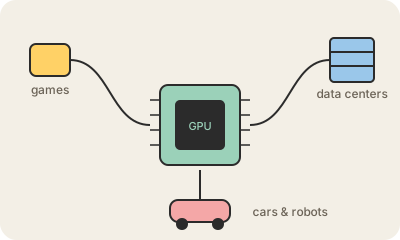
NVIDIA
The company that sells the shovels of the AI gold rush.
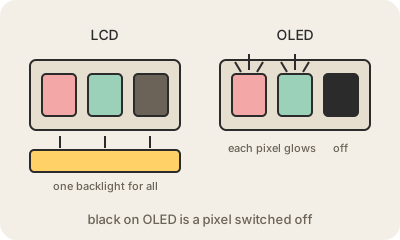
OLED
A screen where every pixel makes its own light, so black is truly off.
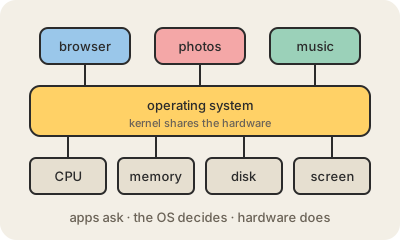
Operating system
The base software that runs a device and lets every app share its hardware.
Power supply
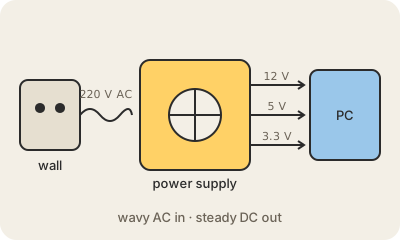
The box that turns wall electricity into the steady, low voltage a computer runs on.
Qualcomm
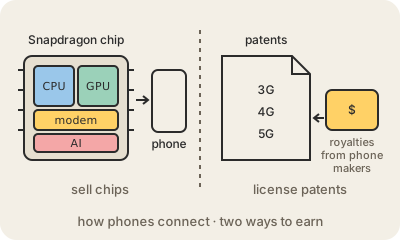
Designs the chips, and owns key patents, that let phones talk to cell towers.
RAM
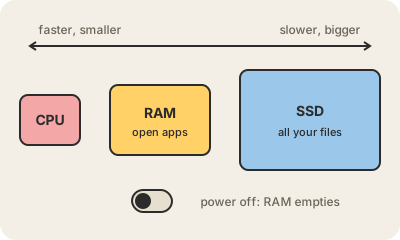
The computer's short-term memory: fast, small and wiped when you turn it off.
Raspberry Pi
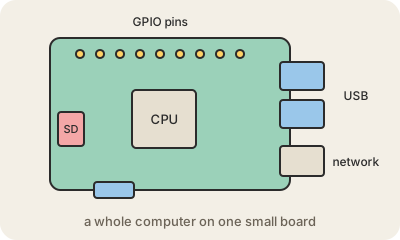
A cheap, credit-card-sized computer made for learning and tinkering.
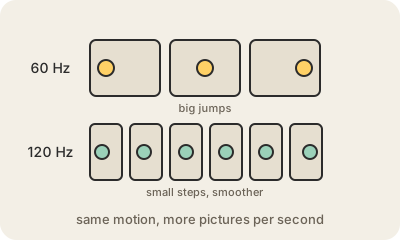
Refresh rate
How many times per second a screen redraws its picture, measured in hertz (Hz).
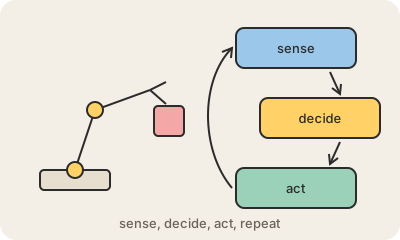
Robotics
Building machines that sense the world, decide what to do, and move to do it.
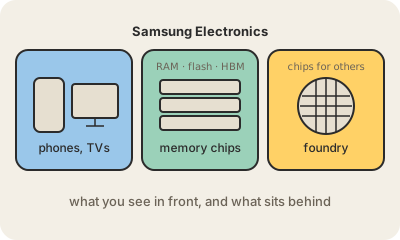
Samsung
Korean giant that sells phones and TVs, and makes much of the world's memory chips.
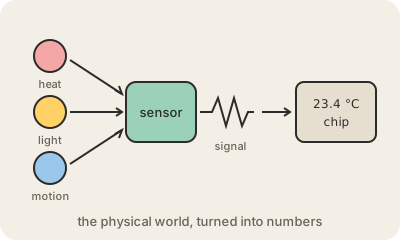
Sensor
A component that measures something in the physical world and turns it into a signal.
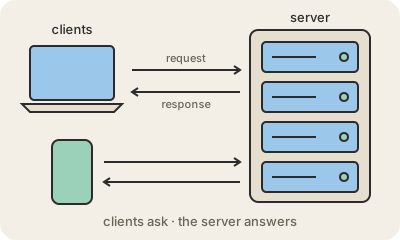
Server
A computer whose job is to answer requests from other computers, all day, every day.
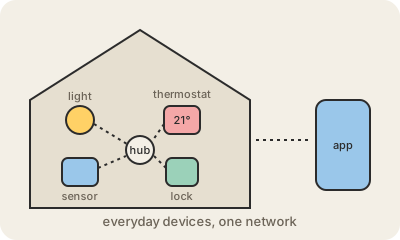
Smart home
A home whose lights, locks and appliances run from a phone or on their own.
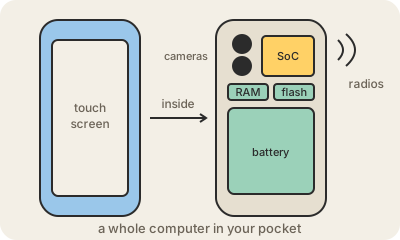
Smartphone
A pocket computer that also makes phone calls.
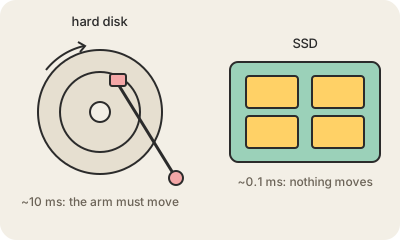
SSD
Storage with no moving parts: where your files live when the power is off.
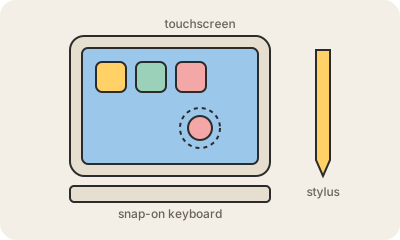
Tablet
A computer that is just a big touchscreen, between a phone and a laptop.
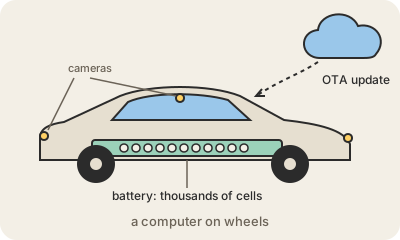
Tesla
An electric car maker that treats the car as a computer on wheels.
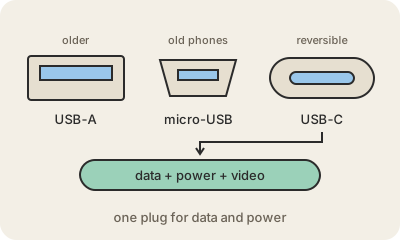
USB
The standard plug for connecting and charging almost everything.
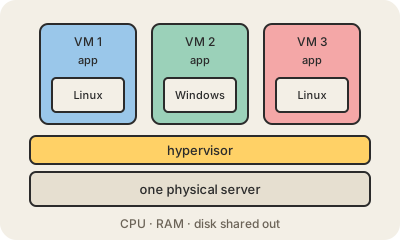
Virtual machine
A complete computer made of software, running inside a real one.
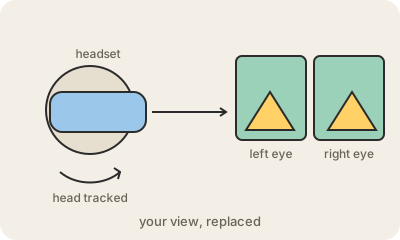
Virtual reality
A headset that replaces what you see with a 3D world that follows your head.
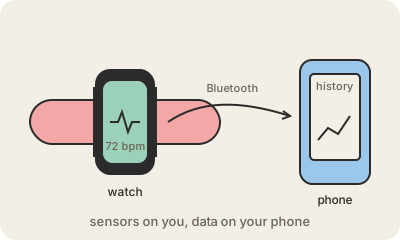
Wearables
Small computers you wear on your body, like smartwatches, fitness bands and smart rings.
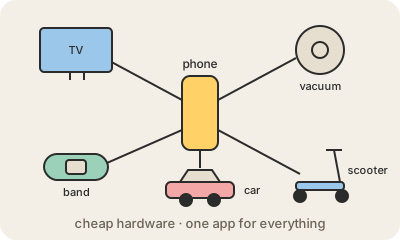
Xiaomi
A Chinese maker of phones and smart home gadgets, and more recently electric cars.
Intermediate
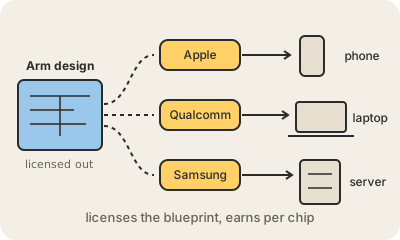
Arm
The British company that designs the processor blueprints inside almost every phone.
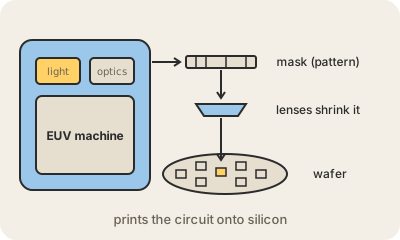
ASML
The Dutch company that builds the machines every advanced chip factory depends on.
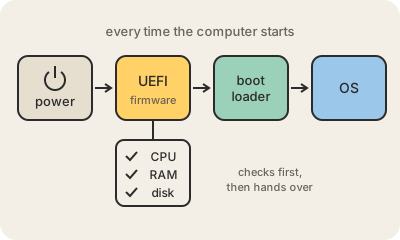
BIOS and UEFI
The first program a PC runs: it checks the hardware and starts the operating system.
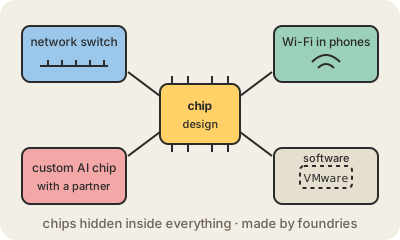
Broadcom
An American chip designer behind data center networking, Wi-Fi and custom AI chips.
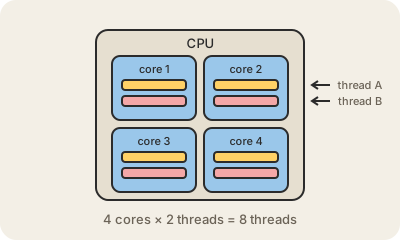
Cores and threads
Why a CPU is really several processors, and why it can juggle even more tasks.
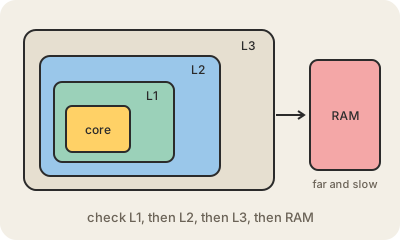
CPU cache
A tiny, very fast memory inside the processor that keeps the data it is about to need.
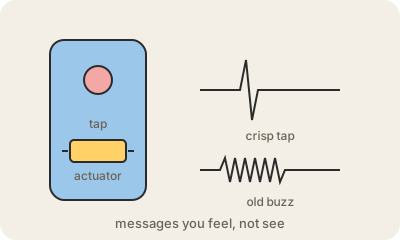
Haptics
Technology that talks to your sense of touch with taps, buzzes and resistance.
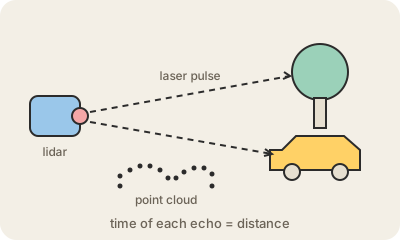
Lidar
A sensor that measures distances by timing laser pulses that bounce back.
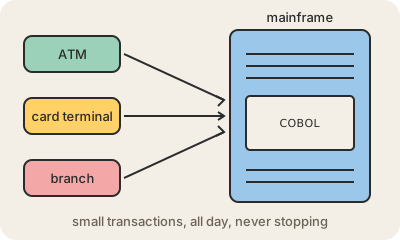
Mainframe
A big, ultra-reliable central computer that banks and airlines use for their core work.
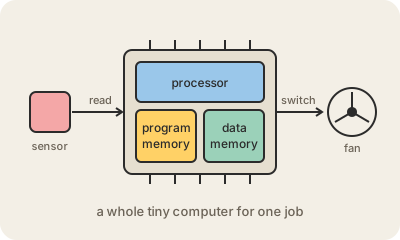
Microcontroller
A tiny, cheap computer on one chip, built to control one specific thing.
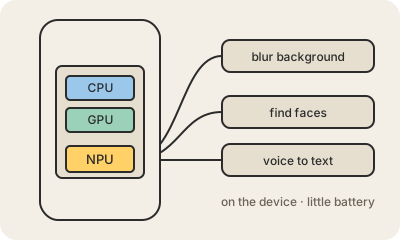
NPU
A small AI engine inside phones and laptops that runs models fast on little battery.
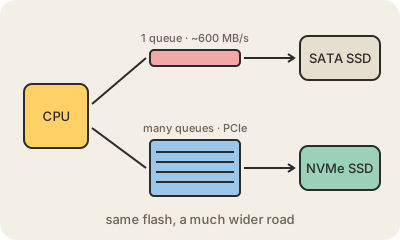
NVMe
The fast way for a computer to talk to an SSD, designed for flash from the start.
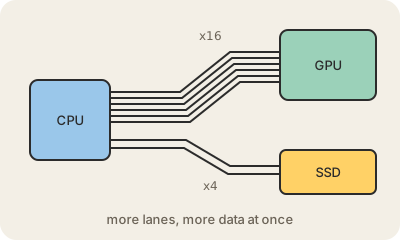
PCIe
The fast internal highway that connects graphics cards and SSDs to the CPU.
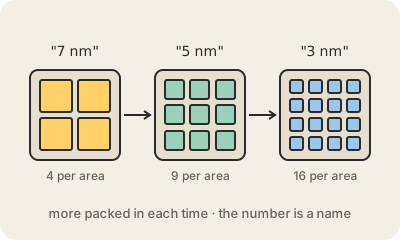
Process node
The name of a generation of chip manufacturing, like "3 nm". A label, not a size.
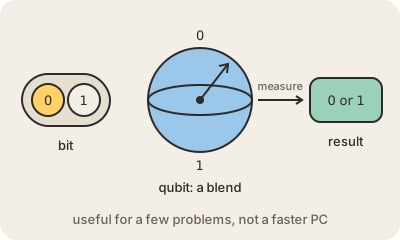
Quantum computer
A machine that uses quantum physics for a few specific problems. Not a faster PC.
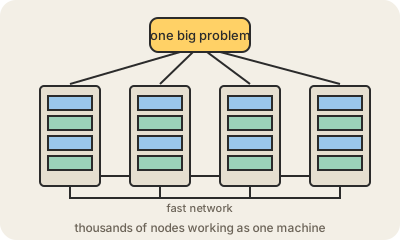
Supercomputer
Thousands of computers wired together to work on one huge calculation at once.
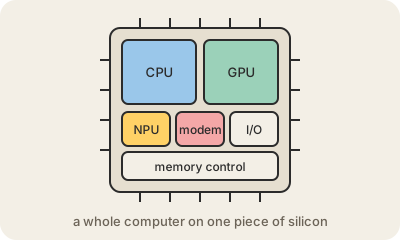
System on a chip
One chip that holds a computer's main parts: CPU, GPU, memory control and more.
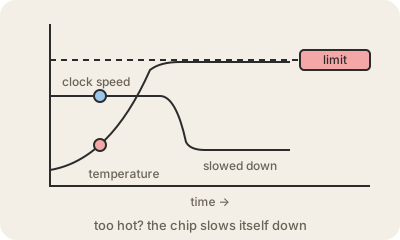
Thermal throttling
A chip slowing itself down on purpose so it does not overheat.
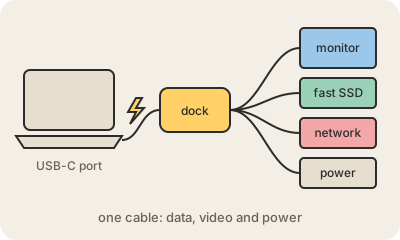
Thunderbolt
A very fast port that carries data, video and power over one USB-C cable.
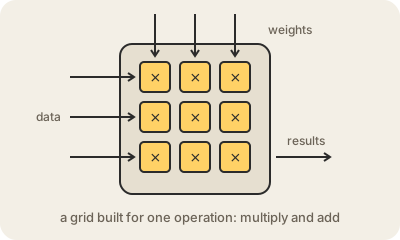
TPU
Google's chip designed specifically for the math of neural networks.
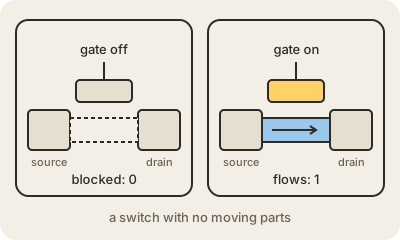
Transistor
An electrically controlled switch, the basic building block of every chip.
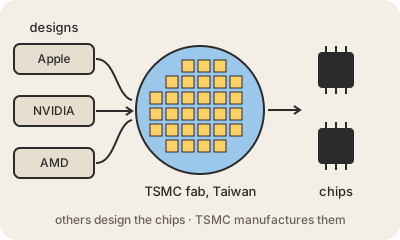
TSMC
The factory that makes the world's most advanced chips for everyone else.
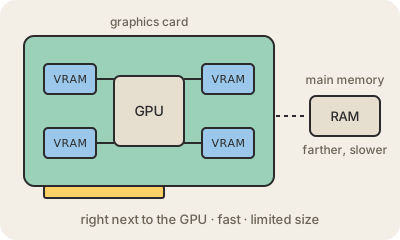
VRAM
The memory built into a graphics card, where the GPU keeps what it is working on.
Advanced
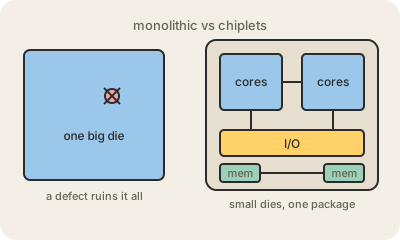
Chiplet
A small chip designed to be combined with others in one package, like a building block.
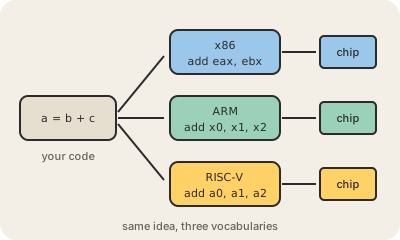
Instruction set architecture
The vocabulary of basic commands a processor understands, like x86, ARM or RISC-V.
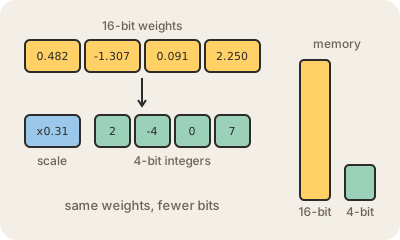
Quantization
Storing a model's numbers with fewer bits so it needs less memory and runs faster.