E-ink
A screen that looks like printed paper and only uses power when the image changes.
E-ink, also called electronic paper, is the kind of screen used in e-readers like the Kindle or Kobo. Instead of shining light at your eyes like a phone or TV, it shows an image the way paper does: by reflecting the light around you. The page looks matte, has no glare in sunlight and is comfortable to read for hours.
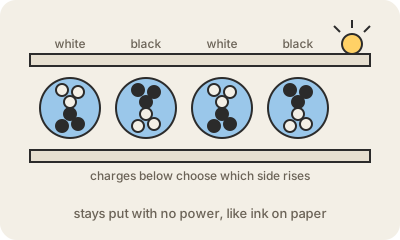
Inside are millions of microscopic capsules filled with a clear liquid and tiny particles, white ones and black ones carrying opposite electric charges. An electric field under each spot pulls the white particles to the top (that spot looks white) or the black ones (it looks black). Once the particles move, they stay put without any power. That is the key trick: the screen only uses energy when the page changes, so an e-reader battery lasts weeks, and the price tags on some supermarket shelves can run for years.
The trade-offs are clear. Changing the image is slow, often a fraction of a second with a brief flash, so it is poor for video or fast scrolling. Color versions exist but look muted compared with an LCD or OLED. And there is no light of its own; e-readers add a soft front light for reading in the dark. The name comes from E Ink, the company that developed and sells most of these displays.
Keep in mind
- Reflects ambient light like paper instead of glowing.
- Uses power only when the image changes, so batteries last weeks.
- Slow to refresh: great for text, poor for video.
- Used in e-readers, shelf price labels and some signs.