Wearables
Small computers you wear on your body, like smartwatches, fitness bands and smart rings.
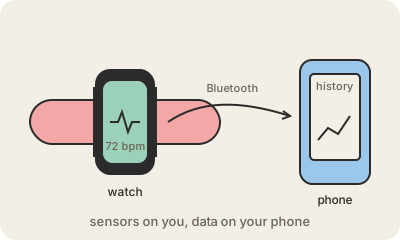
Wearables are electronic devices designed to be worn: a smartwatch on the wrist, a fitness tracker band, a smart ring, wireless earbuds, smart glasses. Each one is a tiny computer with a chip, a battery and, above all, sensors that touch your skin or see the world from where you are.
Those sensors are the point. An accelerometer counts steps and detects a fall; an optical sensor shines light into your skin to estimate heart rate and blood oxygen; some devices take an electrocardiogram or track skin temperature during sleep. Most wearables do not work alone: they connect to your phone by Bluetooth, which does the heavy processing, shows the history and passes on notifications.
Wearables matter because they collect data all day, every day, which no doctor's visit can do. That has real uses: some watches have alerted people to irregular heart rhythms or called emergency services after a hard fall. It also raises fair questions. Health data is sensitive, so it is worth knowing where it is stored and who can see it. And consumer devices give estimates, not medical diagnoses.
Keep in mind
- Wearables are small computers worn on the body, packed with sensors.
- Most pair with a phone over Bluetooth for processing and storage.
- They measure continuously: steps, heart rate, sleep, sometimes ECG.
- Readings are estimates, and the data they collect is sensitive.