Augmented reality
Digital images laid on top of the real world you are looking at.
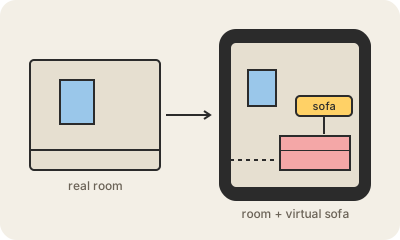
Augmented reality (AR) adds computer-made images to your view of the real world, instead of replacing it. You look at your room through a phone camera or through special glasses, and the device draws extra things on top: an arrow on the street showing where to turn, a virtual sofa standing on your actual floor, the name of each star in the night sky.
To make the drawing stick to the right spot, the device has to understand the space around it. It uses the camera, motion sensors and sometimes a depth sensor like lidar to find floors, walls and objects and to track how you move. That is what lets a virtual object stay put while you walk around it. Most people have met AR through phone apps and games like Pokémon Go, and through filters that put hats or masks on faces in video calls.
The long-term goal is AR glasses you would wear all day, showing directions, messages or translations in front of your eyes. Several companies sell early versions, but making glasses light, bright enough to read outdoors and with a battery that lasts is still hard. The line with virtual reality is blurring too: some headsets show the real room through cameras and add digital objects on top, often called mixed reality.
Keep in mind
- Adds digital content to the real world, rather than replacing it like VR.
- Needs to map the space with cameras and sensors so objects stay in place.
- Most common today on phones: games, face filters, furniture previews, navigation.
- Everyday AR glasses exist but still struggle with weight, brightness and battery.