Data
80 Data terms explained simply, ordered from basic to advanced. Start at the top if the topic is new to you.
Basic
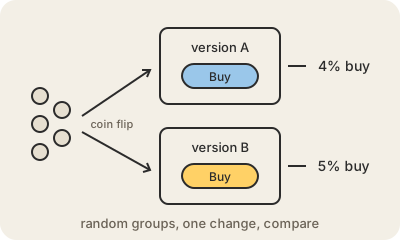
A/B testing
Showing two versions to two random groups and measuring which one works better.
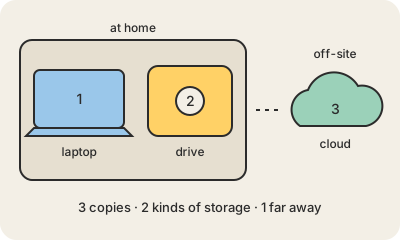
Backup
A separate copy of your data, kept so you can get it back when the original is lost.
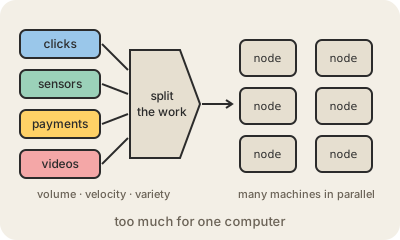
Big data
Data so large, fast or messy that one ordinary computer cannot handle it.
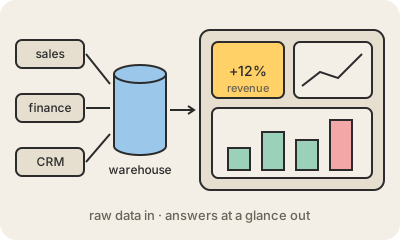
Business intelligence
Turning a company's data into reports and dashboards people use to decide.
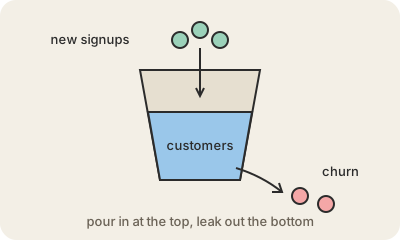
Churn
The customers who leave, and how fast they do it.
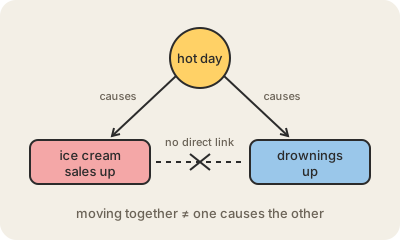
Correlation vs causation
Two things moving together does not mean one of them causes the other.
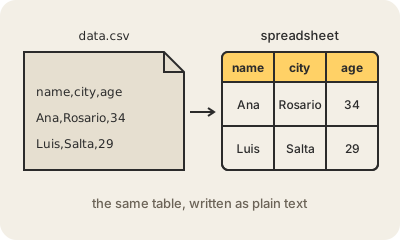
CSV
A plain text file that holds a table: one row per line, commas between values.
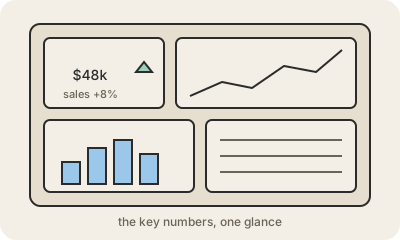
Dashboard
One screen of charts and numbers that shows how something is doing at a glance.
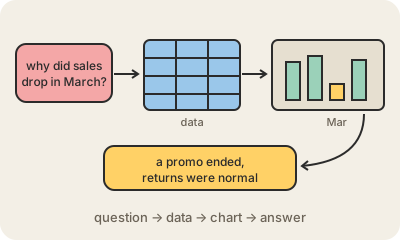
Data analyst
The person who turns a business question into numbers, and the numbers into an answer.
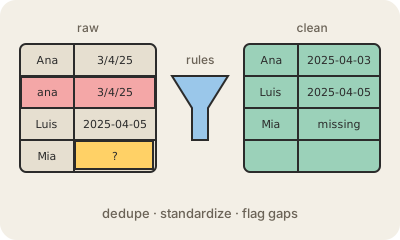
Data cleaning
Fixing errors, gaps and duplicates in data before anyone trusts it.
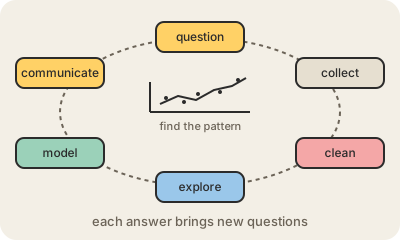
Data science
Using statistics, code and business sense to answer questions with data.
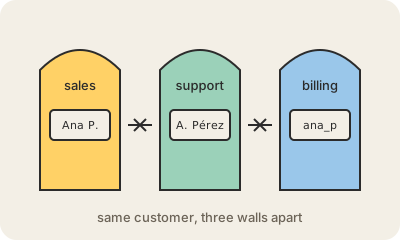
Data silo
Data locked inside one team or system, where the rest of the company can't use it.
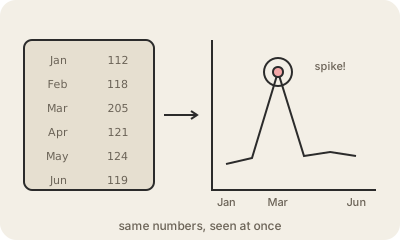
Data visualization
Turning numbers into pictures so patterns jump out.
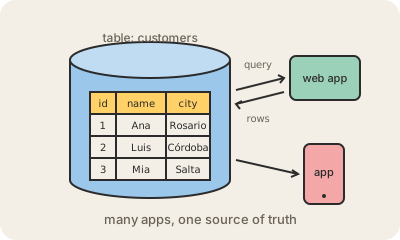
Database
An organized store of data that programs can search and update safely.
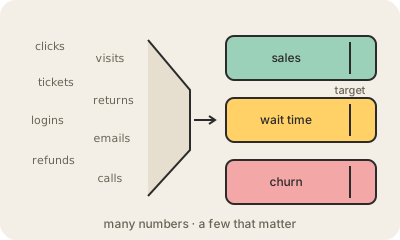
KPI
One of the few numbers a team agrees to watch to know if it is on track.
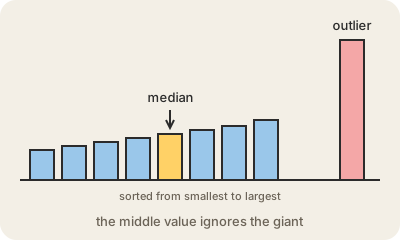
Median and percentiles
The middle value of a list, and the values that mark off the slowest or biggest slice.
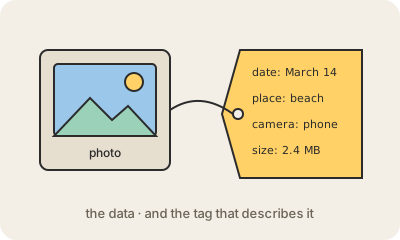
Metadata
Data that describes other data: who made it, when, where and what it contains.
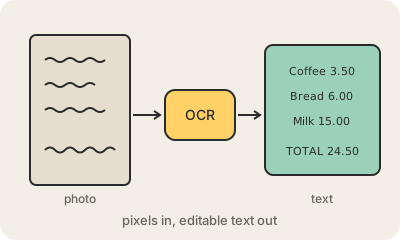
OCR
Software that reads the text in an image so a computer can search and edit it.
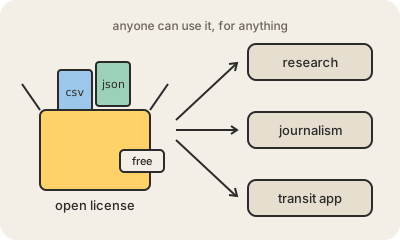
Open data
Data anyone can freely download, use and share, for any purpose.
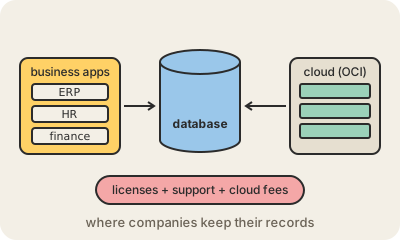
Oracle
The company behind one of the most used business databases, now also a cloud provider.
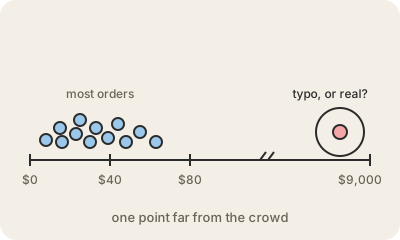
Outlier
A value that sits far away from the rest of the data.
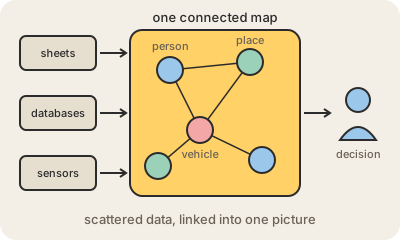
Palantir
Software that joins an organization's scattered data so people can act on it.
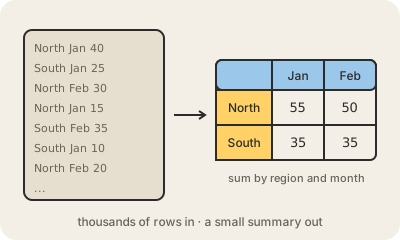
Pivot table
A spreadsheet tool that summarizes a long list into totals by category, in a few clicks.
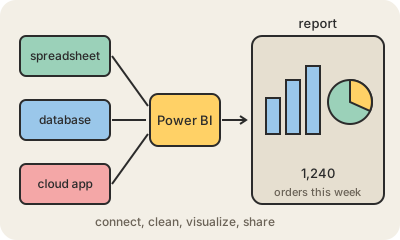
Power BI
Microsoft's tool for turning company data into interactive charts and reports.
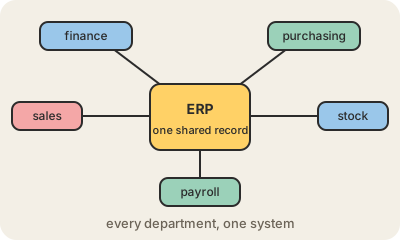
SAP
The German company whose software runs the back office of many large businesses.
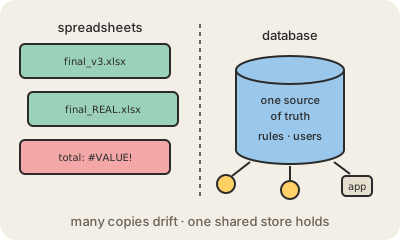
Spreadsheet vs database
Why a company that runs on Excel eventually needs a real database.
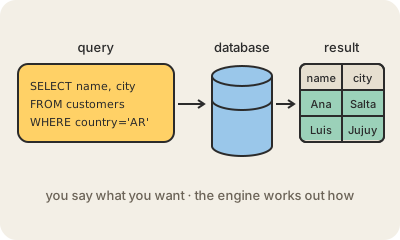
SQL
The language you use to ask a database questions.
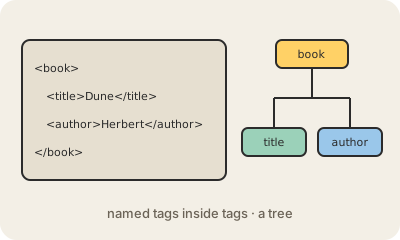
XML
A text format that wraps data in named tags, so both people and programs can read it.
Intermediate
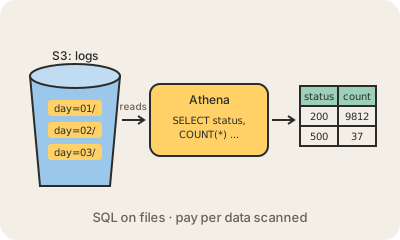
Amazon Athena
Run SQL directly on files sitting in S3, with no database to set up.
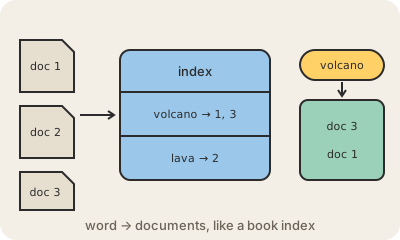
Amazon OpenSearch Service
Managed search engine on AWS, for site search boxes and digging through logs.
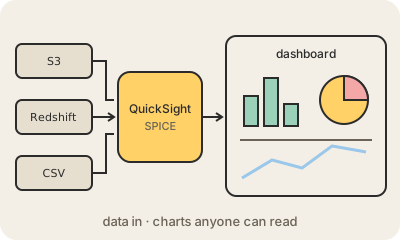
Amazon QuickSight
AWS's tool for turning company data into charts and dashboards people can explore.
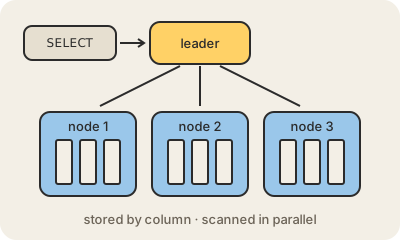
Amazon Redshift
AWS's data warehouse: SQL over huge tables, built for analysis rather than apps.
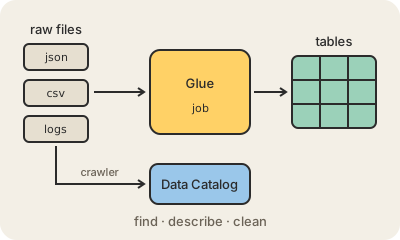
AWS Glue
AWS's service for finding, describing and cleaning up data, with no servers to run.
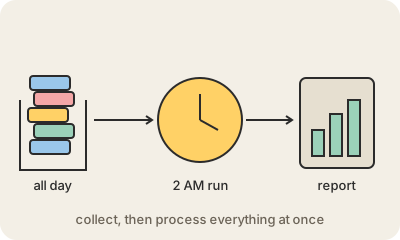
Batch processing
Collecting data for a while and then processing it all in one big run.
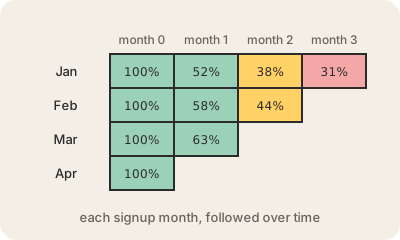
Cohort analysis
Comparing groups of users who started at the same time, to see how each one behaves.
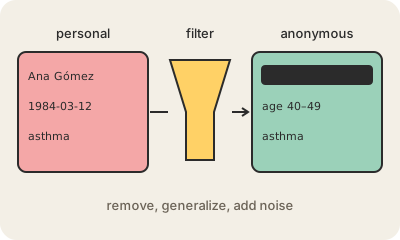
Data anonymization
Changing a dataset so nobody in it can be identified, while keeping it useful.
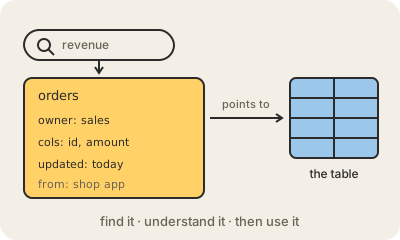
Data catalog
A searchable inventory of an organization's datasets, with what each one means.
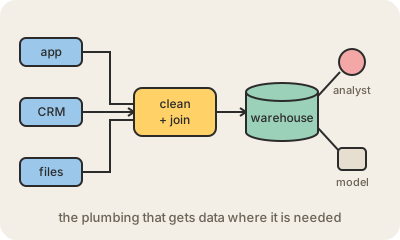
Data engineering
The work of building the pipes that move data to where people can use it.
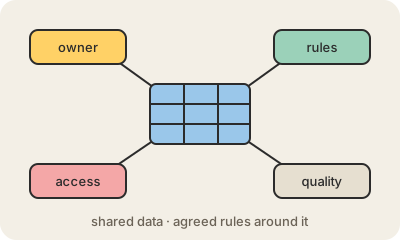
Data governance
The rules and roles that decide who owns data, who can use it and how it is kept right.
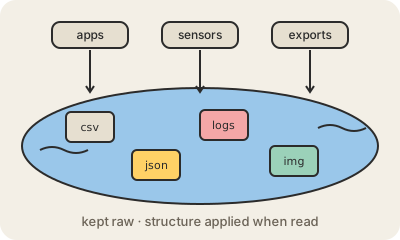
Data lake
Cheap storage where all your data is kept as raw files, to be sorted out later.
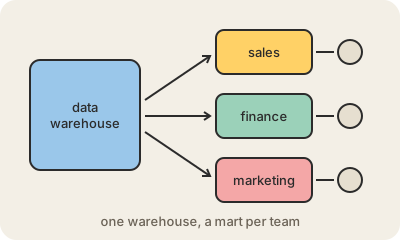
Data mart
A small, focused slice of the company's data, shaped for one team.
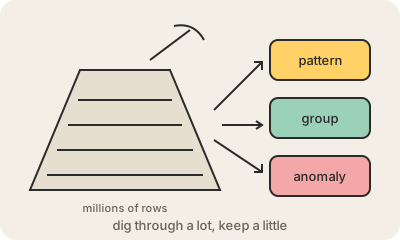
Data mining
Digging through large amounts of data to find patterns nobody wrote down.
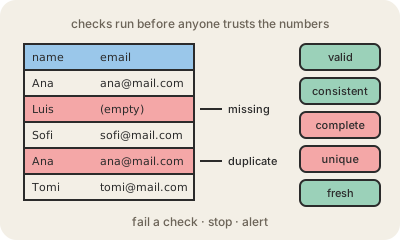
Data quality
How far data can be trusted for the job it is used for.
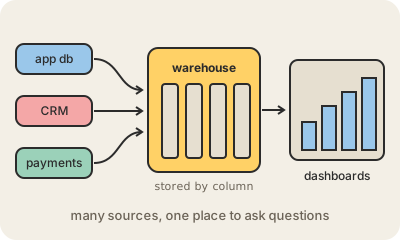
Data warehouse
A database built for analysis: years of history, from many sources, in one place.
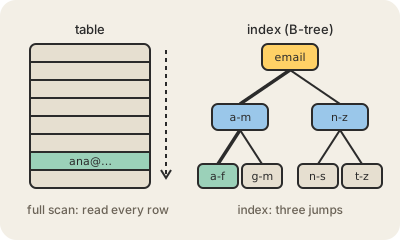
Database index
A sorted shortcut that lets a database find rows without reading the whole table.
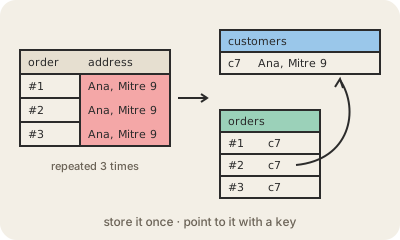
Database normalization
Organizing tables so each fact is stored in exactly one place.
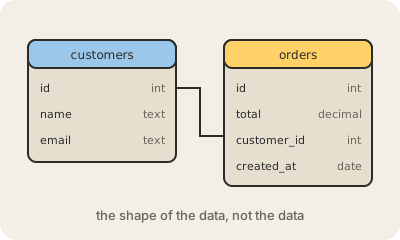
Database schema
The blueprint of a database: which tables exist, their columns and how they connect.
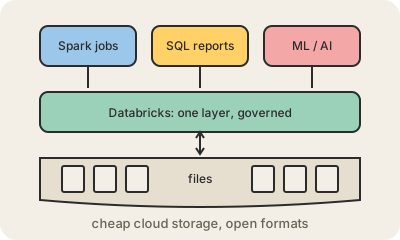
Databricks
A cloud platform for processing, analyzing and training AI on a company's data.
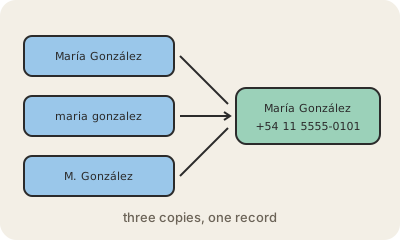
Deduplication
Finding the copies of the same thing and keeping just one.
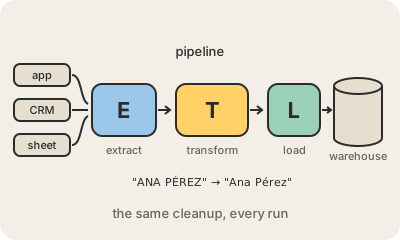
ETL
Copy data out of its sources, clean it up, load it where it can be analyzed.
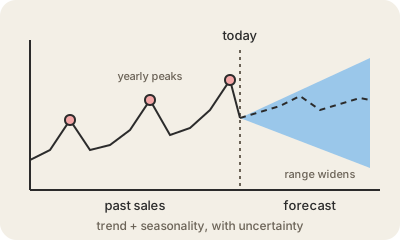
Forecasting
Using past data to estimate future numbers, with an honest range around the guess.
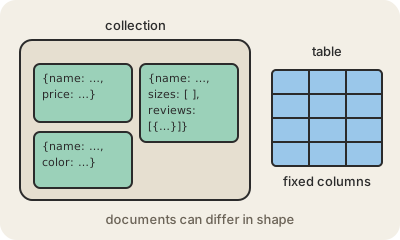
MongoDB
A database that stores each record as a flexible JSON-like document, not a table row.
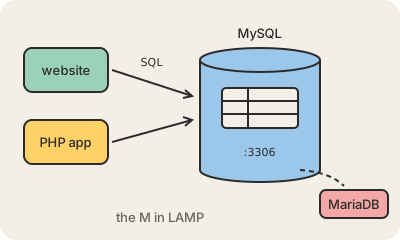
MySQL
The open-source relational database that powered the early web and still runs much of it.
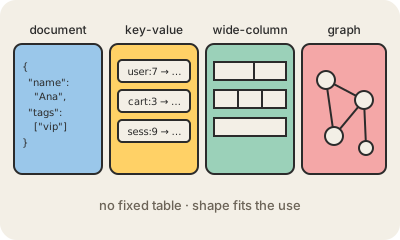
NoSQL
Databases that store data in shapes other than tables with fixed columns.
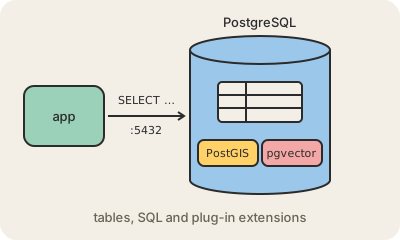
PostgreSQL
A free, open-source relational database behind a great many apps.
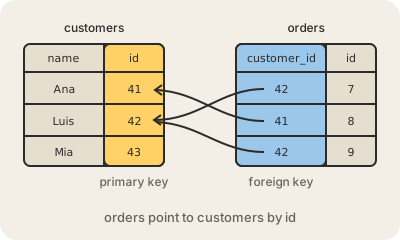
Primary and foreign keys
A primary key names each row uniquely; a foreign key points to a row in another table.
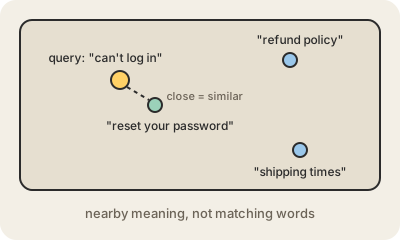
Semantic search
Search that finds results by meaning, not by matching the exact words you typed.
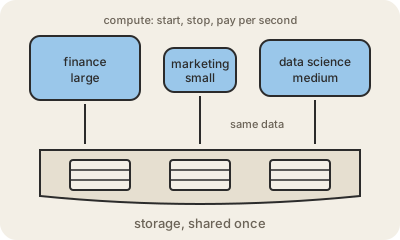
Snowflake
A data warehouse sold as a cloud service, billed by how much computing you use.
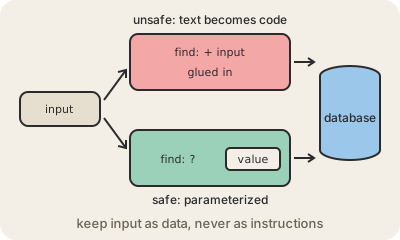
SQL injection
Typing text into a form that the database mistakes for its own instructions.
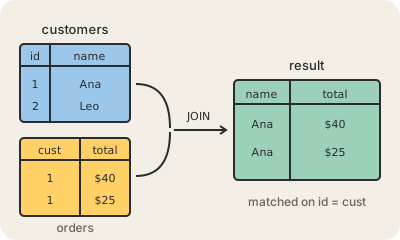
SQL JOIN
The SQL command that combines rows from two tables that share a value.
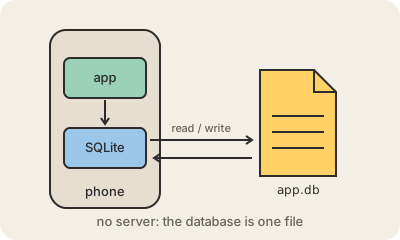
SQLite
A complete SQL database that lives in a single file, with no server to run.
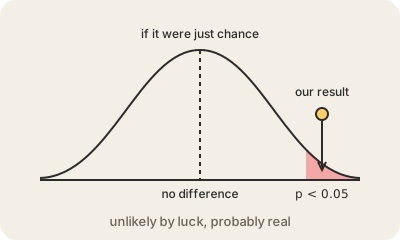
Statistical significance
A test of whether a difference is probably real or could just be luck.
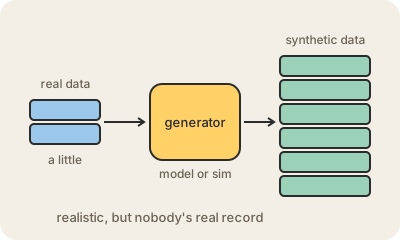
Synthetic data
Data made up by a program to look like the real thing, used to train or test.
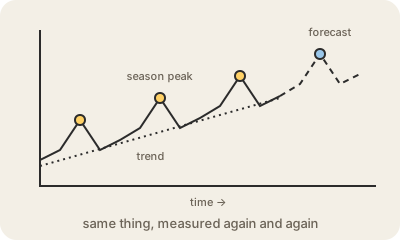
Time series
A list of measurements of the same thing, taken one after another in time.
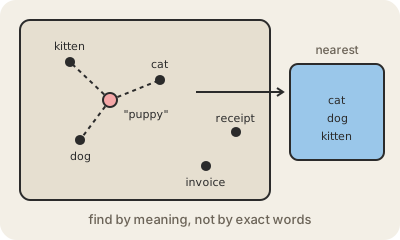
Vector database
A database that finds things by similar meaning instead of exact matching words.
Advanced
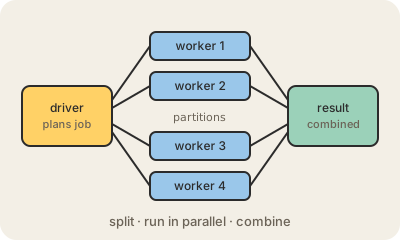
Apache Spark
An open source engine that splits work on huge datasets across many machines.
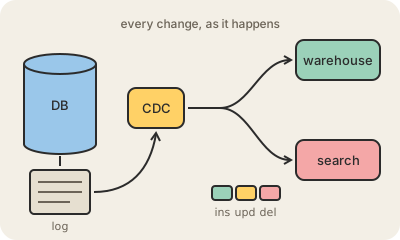
Change data capture
Copying every insert, update and delete from a database to other systems as it happens.
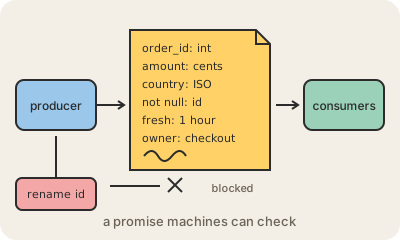
Data contract
A written, checkable promise about the shape and quality of data one team gives another.
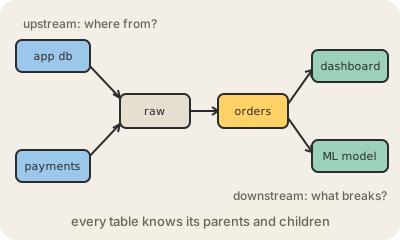
Data lineage
The map of where each piece of data came from and everything that depends on it.
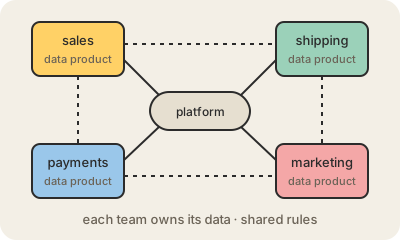
Data mesh
An organizational approach where each business team owns and publishes its own data.
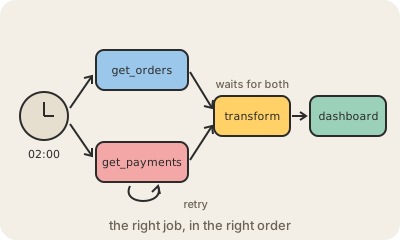
Data orchestration
Running data jobs in the right order, at the right time, and handling it when they fail.
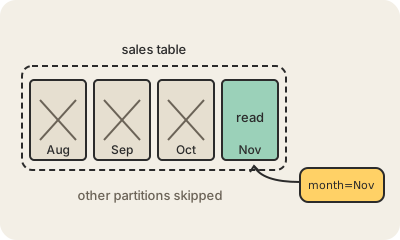
Data partitioning
Splitting a huge table into pieces by a key, so queries only touch what they need.
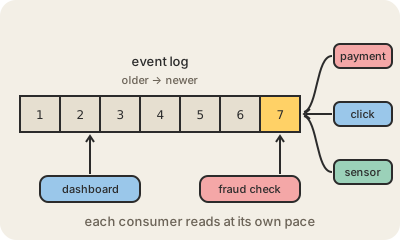
Data streaming
Processing data as a continuous flow of events, seconds after they happen.
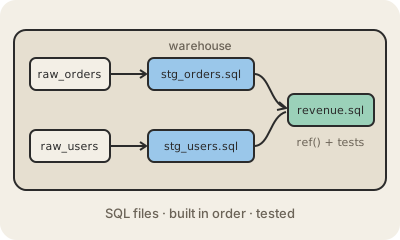
dbt
A tool for writing data transformations as SQL files, with tests and docs, like software.
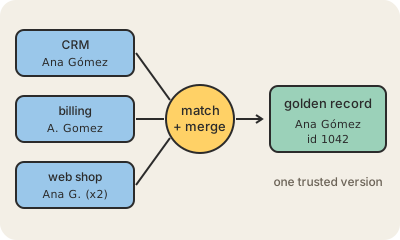
Master data management
Keeping one agreed, trusted version of a company's core records across all its systems.
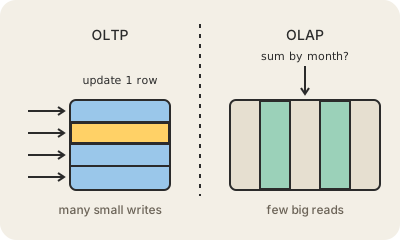
OLAP and OLTP
Two kinds of database work: many small transactions, or a few huge analytical questions.
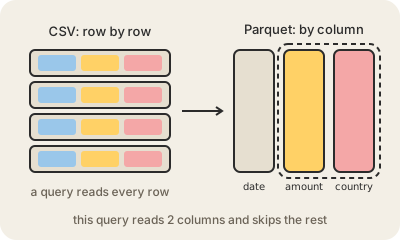
Parquet
A file format that stores tables by column, compressed, so analytics reads far less.
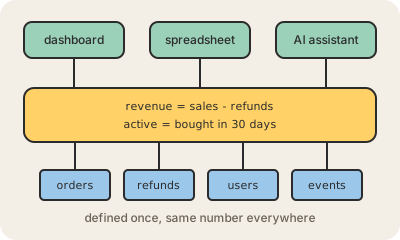
Semantic layer
One place that defines a company's metrics, so every tool computes them the same way.
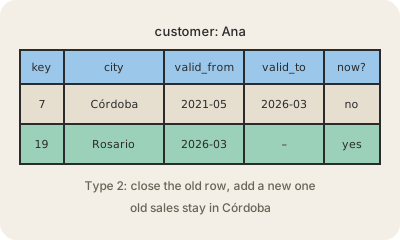
Slowly changing dimension
The rules a data warehouse uses when descriptive data, like a customer's city, changes.
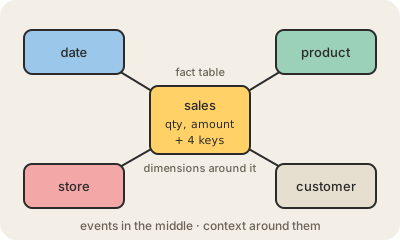
Star schema
A data warehouse layout: one table of events in the middle, descriptive tables around it.