KPI
One of the few numbers a team agrees to watch to know if it is on track.
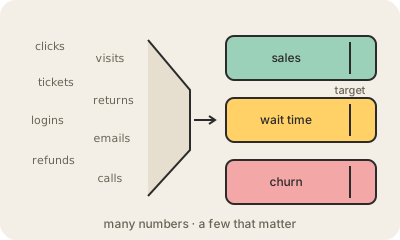
A KPI, short for key performance indicator, is a measurable number chosen to show whether a team or company is reaching a goal. A store might track monthly sales and average ticket; a support team, how long customers wait for an answer; a hospital, average time in the emergency room. Out of all the things you could count, the KPIs are the handful you decide really matter.
A useful KPI has three parts: a precise definition ("active customer" means bought at least once in the last 30 days), a target (wait time under 2 minutes) and a time frame (per week). Without the definition, two departments will calculate it differently and argue about the result; without the target, nobody knows if the number is good or bad.
KPIs usually live on a dashboard and get reviewed at regular meetings. The classic trap is choosing what is easy to measure instead of what matters, or rewarding a number so hard that people game it: a call center judged only on call length learns to hang up quickly.
Keep in mind
- A small set of numbers tied to goals, not everything you can count.
- Needs a precise definition, a target and a time frame.
- Shared definitions keep teams from arriving with different totals.
- A number that is rewarded too hard tends to get gamed.