Workload
Any job you run on computers: an app, a database, a nightly report, an AI model.
In cloud talk, a workload is any piece of work that uses computing resources: a website, the backend of a mobile app, a database, a batch job that crunches numbers every night, the training of an AI model. It is a deliberately broad word. It lets people talk about what they run without saying yet whether it lives on a virtual machine, in containers or in serverless functions.
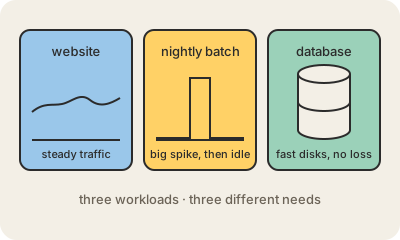
Thinking in workloads helps decide where and how each thing should run, because they behave differently. An online store has steady traffic with spikes on sale days. A monthly report needs a lot of power for an hour and nothing the rest of the month. A database needs fast disks and must never lose data. Each one can get the size, price model and level of protection it needs, instead of one setup for everything.
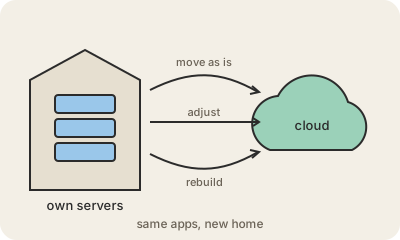
You will see the word everywhere: "migrating workloads to the cloud", "production workloads", "AI workloads". AWS's Well-Architected guidance defines a workload as a set of components that together deliver business value, and Kubernetes uses the same word for the apps you run on a cluster.
Keep in mind
- Any app, job or service that uses computing resources.
- A neutral word: it does not say where or how the thing runs.
- Different workloads need different sizes, prices and protection.
- Common phrases: production workloads, AI workloads, migrating workloads.