Recommendation system
Software that guesses what you will want next: a song, a show, a product.
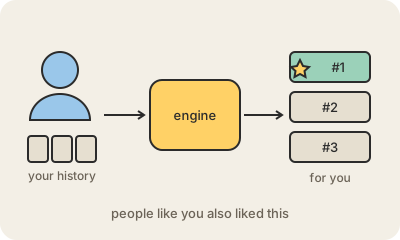
A recommendation system is the program behind "you might also like". It looks at what you watched, bought, clicked or skipped, compares it with millions of other people, and ranks what to show you next. Netflix rows, Spotify's weekly playlist, YouTube's sidebar, Amazon's product suggestions and the endless feed of TikTok are all recommendation systems.
There are two classic ideas, usually combined. The first looks for people similar to you: if many people who loved the same five series as you also loved a sixth one, it will suggest that sixth one. The second looks at the items themselves: if you listen to a lot of slow acoustic songs, it finds more songs with that sound. Modern systems are machine learning models that mix both with signals like time of day or what is trending.
They matter because they decide much of what billions of people see. A good one saves you from scrolling through thousands of options. But these systems are usually built to maximize how long you stay or how much you click, which is not always what is good for you, and they can keep showing you more of the same, a pattern people call a filter bubble.
Keep in mind
- Predicts what each person is likely to want next.
- Learns from what you and similar people did before.
- Powers the feeds of Netflix, Spotify, YouTube, TikTok and online shops.
- Usually tuned for engagement, which can create filter bubbles.