SIM card
The small chip card that tells the mobile network which line is yours.
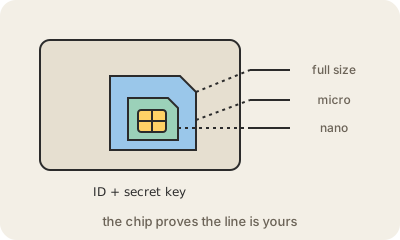
A SIM card (Subscriber Identity Module) is the little card that goes into your phone and ties it to your mobile line. On it is a tiny chip that stores an identity number for your subscription and a secret key shared only with your carrier. When the phone connects, the network sends a challenge, the SIM answers using that key, and the carrier knows it really is your line, without the key ever leaving the card.
Because the identity lives on the card, not in the phone, you can move a SIM to another phone and your number goes with it. That is also why it can be protected with a PIN: if someone steals the card, they still need the code to use it. SIMs have shrunk over the years, from credit-card size in the early 1990s to the nano-SIM used in most phones today.
The SIM is slowly giving way to the eSIM, a chip built into the phone that downloads the same information instead of holding it on removable plastic. Either way, the SIM is what criminals target in SIM swapping: if they convince your carrier to move your number to their card, they receive your calls and verification codes. A carrier PIN on the account helps prevent it.
Keep in mind
- Holds your subscriber identity and a secret key that proves the line is yours.
- Move the card and your number moves with it.
- Sizes shrank to the nano-SIM; eSIMs are replacing the plastic card.
- Protect it with a PIN and guard your account against SIM swapping.