Digital footprint
The trail of data you leave behind every time you use the internet.
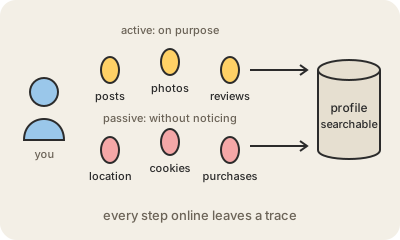
Your digital footprint is everything about you that ends up online or in someone's database because you used the internet. Part of it you leave on purpose: posts, photos, comments, reviews, a profile on a job site. That is the active footprint. The rest you leave without noticing: the location your phone reports, the pages you visit, what you buy, which ads you click, the cookies that follow you from site to site. That is the passive footprint, and it is usually much bigger.
It matters because it is hard to erase and easy to search. A recruiter can find an old post. A scammer can learn your pet's name, your school and your birthday, which are classic answers to security questions, and use them for phishing or identity theft. Companies called data brokers collect and sell profiles built from these traces. Even a photo can reveal where you live through its metadata or what is visible out the window.
You cannot live with zero footprint, but you can shrink it. Search your own name now and then. Review the privacy settings of your social networks, delete accounts you no longer use, and think twice before posting where you are in real time. In many countries, data protection laws such as GDPR give you the right to ask a company what it holds about you and to delete it.
Keep in mind
- Active footprint: what you post on purpose. Passive: what is collected as you browse.
- The passive part is usually bigger and less visible.
- Old traces can feed scams, identity theft or doxxing.
- Shrink it: check privacy settings, delete old accounts, search your name.